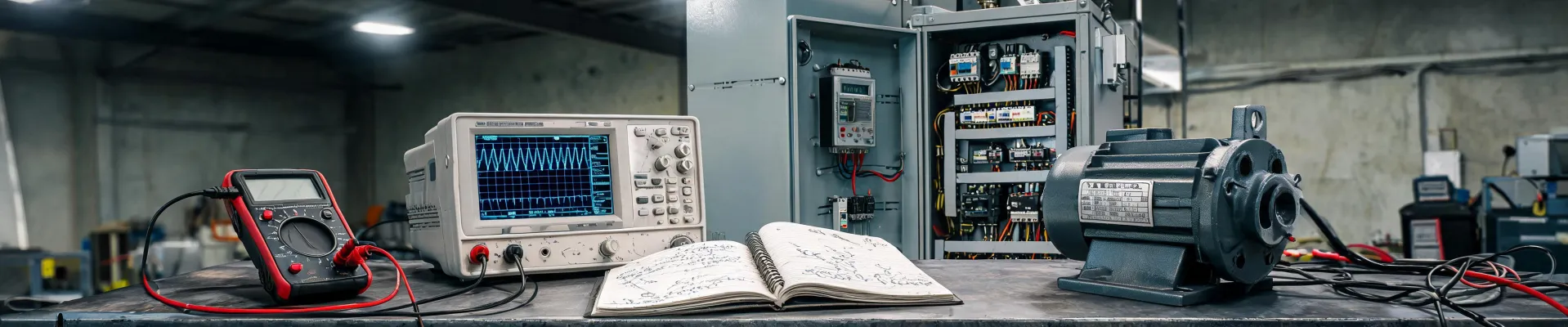
In March 2024, I signed off on 1,400 multimeters for a distributor client. Six months later, 14% of them were reading voltage outside their own published accuracy spec. Nobody got hurt—luckily. But one end user trusted a wrong reading on a 480V panel, wasted a full service call, and started questioning everything else we'd sent them.
I'm a procurement lead who's handled electrical tester and sensor orders for nine years. I've personally made—and documented—seven significant sourcing mistakes, totaling roughly $30,000 in wasted budget. Now I maintain our team's checklist so nobody else repeats them.
This article is that checklist in reverse: it starts with the mistakes, because you have to see the problem before the solution makes sense.
The Surface Problem: Everyone Asks About Hioki Multimeter Price
The search term that shows up in almost every initial sales conversation is "hioki multimeter price". I typed the same thing into Google myself, back when I thought the whole game was finding a quality brand at a discount.
Here's what the price research usually looks like. Based on publicly listed distributor prices in April 2025, a basic handheld Hioki multimeter falls somewhere in the $150–$400 range depending on model, accessories, and calibration options. Specialty clamp meters and insulation testers go higher. Prices vary by vendor and region, so verify current rates before you plan a budget.
But here's what I learned the hard way: that search term is incomplete. The price is not the problem.
In Q3 2022, I ordered 600 clamp meters from a vendor who promised "same specs, half the price." We saved $2,100 on the purchase order. It looked smart until 47 units came back with current measurement errors. The replacement units and expedited shipping cost us $5,800, plus a 10-day delay that made a retailer question whether we could handle their volume at all.
That's the classic mistake: I compared the sticker price instead of comparing the system behind the sticker. The cheap option isn't cheap—it's just a down payment on risk.
The Deeper Problem: You're Treating a Precision Instrument Like a Commodity
A multimeter is not a commodity. Neither is a sensor. Both are precision instruments. When you buy a commodity, the only variable that matters is price. When you buy a precision instrument, the variables that matter are accuracy, safety, repeatability, and the manufacturer's ability to prove all three.
This is where a lot of bulk buyers—including me, twice—get lost.
Here's the counterintuitive part: the real question isn't "electrical tester oem vs private label." That's how I used to frame it, as a branding choice. Do we want our logo on it? Do we want the manufacturer's logo on it? Those are cosmetic questions. They don't tell you who owns the spec.
The real question is: who owns the specification?
In a true OEM arrangement, you're buying a product that the manufacturer has already designed, built, and tested to a defined specification. Your label goes on the side. In a private-label arrangement, the same can be true—or it can mean someone printed your logo on an existing product and is now calling you the manufacturer. If the seller can't show you design documentation, calibration records, and test data, then you're the one holding the liability. You just might not know it yet.
The same logic applies to bulk sensor purchases. Search "bulk sensor" and you'll find dozens of suppliers with unbeatable per-piece pricing. But a sensor is only useful if it stays within its stated tolerance across temperature and time. A sensor that drifts is worse than no sensor, because your process will trust it. What matters in a "sensor oem" relationship isn't the price sheet—it's whether the manufacturer understands the application and documents the performance.
I have mixed feelings about premium brands, honestly. Part of me resents the markup. Another part remembers that the "budget" testers are the ones that actually cost me money. I've reconciled it by focusing on documentation, not logos.
The cheapest part of an electrical failure is the instrument that was supposed to prevent it.
The Costs That Don't Show Up on the Purchase Order
Let's get specific about what went wrong, because pain is a better teacher than theory.
Mistake 1: No spec-verification process. In September 2022, we shipped 400 testers to a client before anyone noticed the input protection rating didn't match the purchase order. The client's QA caught it in incoming inspection. $890 in redo, plus a one-week hold that delayed their whole tool rollout. We didn't have a formal spec-verification process. We do now.
Mistake 2: Ignoring safety ratings. The IEC 61010 series (Source: IEC Webstore, webstore.iec.ch) defines measurement categories for electrical test equipment—CAT II, CAT III, CAT IV. These ratings aren't marketing language. They describe where a meter is safe to use relative to transient overvoltages. Using a CAT II meter on a CAT III distribution circuit is how instruments fail violently. The instrument itself is usually the cheapest part of that incident. The technician, the panel, the downtime—those aren't on the invoice.
Mistake 3: Forgetting who carries the brand. When we private-labeled testers without controlling the spec, we collected the blame for every failure. The factory had a good price. But a bad batch didn't cost the factory a client—it cost us one. Warranty claims, service calls, and credibility damage don't show up on a purchase order. They show up on next year's revenue.
Mistake 4: Trusting paperwork instead of verifying it. We bought 200 sensors for a process line because the supplier included a calibration certificate. Turned out the certificate was from an in-house lab with no traceable standard. The client's metrology team retested all 200; 30% were outside tolerance. Recertification took three weeks and cost more than the sensors themselves.
Add it up and the pattern is obvious: the visible cost of a reliable multimeter is the price; the hidden cost of an unreliable one is everything that happens after it fails.
The Fix: A Checklist That Costs Nothing and Saves a Lot
I finally built a checklist in Q1 2024 after the third batch rejection. Since then, we've caught 47 potential errors before they became expensive lessons. I can't promise the same number for you, but I can tell you the checklist is short enough to actually use.
- Write the spec before you look at the price. CAT rating, input protection, accuracy, temperature range. No spec, no conversation.
- Ask who actually manufactured the product. If it's private label, get the factory's quality records and audit reports.
- Request calibration certificates and test data from the first article—not a sample, the actual production unit.
- Define an acceptable failure rate and what happens if it's exceeded. Replacement? Credit? Full lot return? Get it in writing.
- Calculate total cost over 24 months: purchase price, calibration, replacements, admin time, and one realistic failure scenario.
- Check whether the supplier's OEM history includes third-party testing. If they can't produce it, ask why.
This is where I landed with Hioki. Not because I think they're flawless—no manufacturer is—but because the documentation I now refuse to skip is documentation Hioki already has. Since 1935, they've focused on measuring instruments (Source: hioki.com, accessed April 2025), and their OEM and private-label partnerships for multimeters, sensors, and testers are built around that same documentation trail. When buying in bulk, that traceability is worth more than any price concession.
The conclusion sounds obvious, and yes, I'm a little bitter that it took me seven mistakes and $30,000 to reach it: prevention is not a cost. It's a discount on the future.
Now go check your own checklist. There's probably one item on it that could save you more than this article cost you to read.

Rebecca Sloan
Rebecca Sloan is a power distribution and protection analyst specializing in circuit breakers, switchgear, contactors, fuses, surge protective devices, and coordination. She applies IEC 60947-2 breaker requirements, IEC 60269 fuse characteristics, and IEC 61643-11 tests while examining rated voltage, breaking capacity, time-current curves, selectivity, and prospective short-circuit current. She helps engineers and buyers compare protective devices against documented fault levels, installation conditions, maintenance access, and continuity priorities.