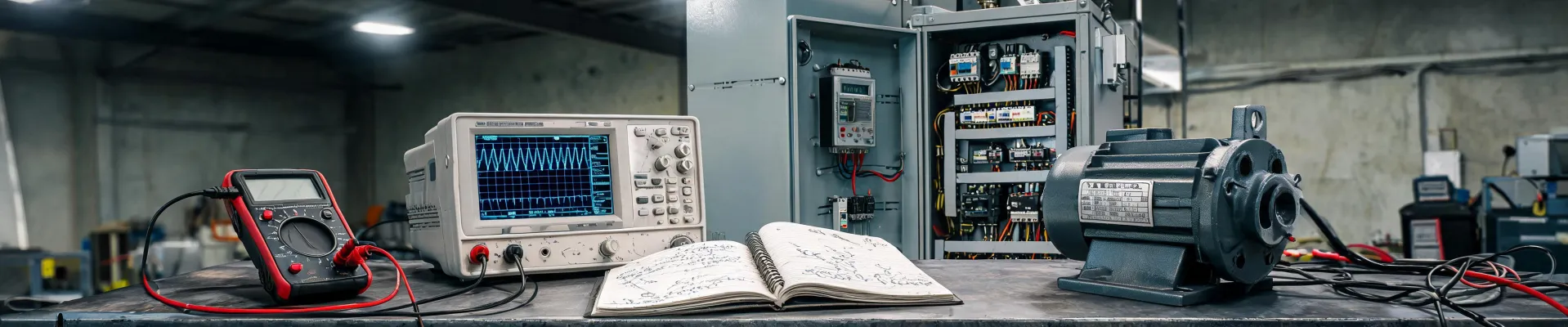
When I first started sourcing test instruments for our distribution catalog, I assumed a Hioki multimeter price was the whole story. Lowest quote wins, right? Three supplier audits and one ugly calibration batch later, I learned that the number on the quote is maybe 60% of the real cost. The rest hides in calibration, returns, support, and the time your team spends cleaning up a bad batch.
If you're searching for how to choose tester for wholesale, start with your customer's requirement, not the quote. There's no single best way to choose an electrical tester supplier. It depends on what you're selling, who you're selling to, and whether your customers care about traceability or just a working continuity beeper. I've split this into four scenarios. Find yours, then read that section first.
The four sourcing scenarios
- Scenario A: You sell to industrial end users who need documented calibration and brand-name reference instruments.
- Scenario B: You want OEM/private-label multimeters or clamp meters for your own brand.
- Scenario C: You need bulk sensors or accessories to bundle with testers.
- Scenario D: You're building a mixed catalog and need both branded and private-label supply.
Scenario A: Branded reference instruments for industrial buyers
If your customers are maintenance teams, electricians at plants, or calibration labs, they usually don't just want a multimeter. They want a defensible measurement. That means CAT III or CAT IV safety ratings, true RMS, input protection, and calibration paperwork that traces to a standard. According to IEC (iec.ch), IEC 61010-1 covers safety requirements for electrical equipment for measurement, control, and laboratory use. IEC 61010-2-033 adds requirements for multimeters and similar handheld test tools.
In this scenario, the Hioki multimeter price you see from an authorized distributor is not the same as a gray-market quote. In Q1 2024, we compared six quotes across three channels for a comparable industrial multimeter. The spread was 22-38% for what looked like the same model. The cheapest quote had no calibration certificate, a 14-day return window, and a lead time that slipped twice. The authorized quote included NIST-traceable calibration, a 3-year warranty, and technical support. We went authorized. The unit price was higher, but our return rate dropped from 4% to under 1%.
Counterintuitive advice: if you're a small distributor, don't rush to go direct or OEM just to beat the branded price. The margin looks better until your first customer asks for calibration documentation and you can't provide it. A specialist supplier who says 'we don't do private label for this model, but here's who does' is more useful than a generalist who promises everything.
Scenario B: OEM/private-label multimeters and clamp meters
Private label is tempting. You control the brand, the margin, and the packaging. But the 'always get three quotes' advice ignores the cost of vetting factories and the risk of hidden quality drift. I only believed that after ignoring it once. We approved a low-cost OEM clamp meter batch without a proper pre-shipment accuracy check. About 8% of the units drifted beyond spec within six months. We spent $3,200 on returns, retesting, and credit notes. Saved maybe $1,100 on the initial order. Net loss: $2,100, plus a hit to our reputation.
For OEM/private label, ask three questions before price: Who owns the calibration procedure? What is the incoming QC test? What happens when a batch fails? A good OEM partner will have documented answers. A weak one will say 'no problem' to everything. That's a red flag. The vendor who says 'this model isn't our strength - we're better at basic clamp meters than high-end bench meters' is the one I trust for the rest of the catalog.
Also, don't assume OEM is always cheaper. For low volumes, private label tooling, packaging, and certification can push the landed cost above branded wholesale. Run a TCO spreadsheet that includes MOQ, tooling, freight, duty, calibration, and warranty reserve. If the difference is under 10%, I'd rather keep the branded line and use OEM for a niche accessory.
Scenario C: Bulk sensors and accessories
Bulk sensor sourcing is where the 'penny wise, pound foolish' math gets ugly. We saved $12 per unit on a bulk sensor order once. Then we spent $3,000 replacing failed sensors in the field and another $900 in expedited shipping. The sensors looked identical. The difference was in the temperature compensation and connector strain relief. For B2B, a sensor isn't a commodity if it's going into a tester that a customer relies on.
When you buy bulk sensors, ask for the drift spec, operating temperature range, and mating cycle rating. If the supplier can't provide a datasheet with test conditions, you're not buying a sensor - you're buying a hope. And for wholesale, your customers will notice. A cheap sensor that fails at -10 C is not a bargain in Minnesota or Norway.
Scenario D: Mixed catalog sourcing
Most distributors end up here. You need Hioki multimeters for the customers who specify them, OEM clamp meters for your own brand, and bulk sensors for bundles. The mistake is trying to force one supplier to do all three. That's where the 'one-stop shop' promise gets expensive.
I'd rather split the category. Use a specialist for branded test instruments. Use a separate OEM partner for private label. Use a third supplier for sensors if that's not their core. Yes, it's more vendors to manage. But the total cost is lower when each vendor stays inside their expertise. A supplier who admits 'we don't make high-accuracy sensors - here's a partner who does' saves you from a much worse problem later.
How to tell which scenario you're in
Run this quick check:
- If your customers ask for calibration certificates or specific brand names, you're in Scenario A.
- If you're selling under your own brand and control the packaging, you're in Scenario B.
- If your main margin comes from bundling accessories or sensors, you're in Scenario C.
- If you're doing at least two of the above, you're in Scenario D - and you should probably not use one supplier for everything.
One more thing about Hioki multimeter price: don't anchor on a single number from a search result. Pricing changes by model, authorized channel, calibration option, warranty, and MOQ. In 2025, we've seen quotes for the same spec range vary by more than 30% depending on whether calibration and support were included. Get quotes that spell out what's in the box. If a quote is dramatically lower, assume something is missing until proven otherwise.
Prices and lead times as of 2025; verify current quotes and standards with your supplier and official bodies.
Omar Rahman
Omar Rahman is a power-conversion and quality analyst specializing in UPS systems, inverters, rectifiers, battery chargers, power supplies, and bypass arrangements. He applies IEC 62040-3 tests to UPS efficiency, output tolerance, harmonic distortion, overload behavior, transfer time, and autonomy, while using IEC 62477-1 to examine safety boundaries for other power-electronic converters. He helps facility and renewable-energy teams match conversion equipment to critical load profiles, runtime targets, redundancy, thermal conditions, maintenance strategy, fault behavior, and total ownership cost.