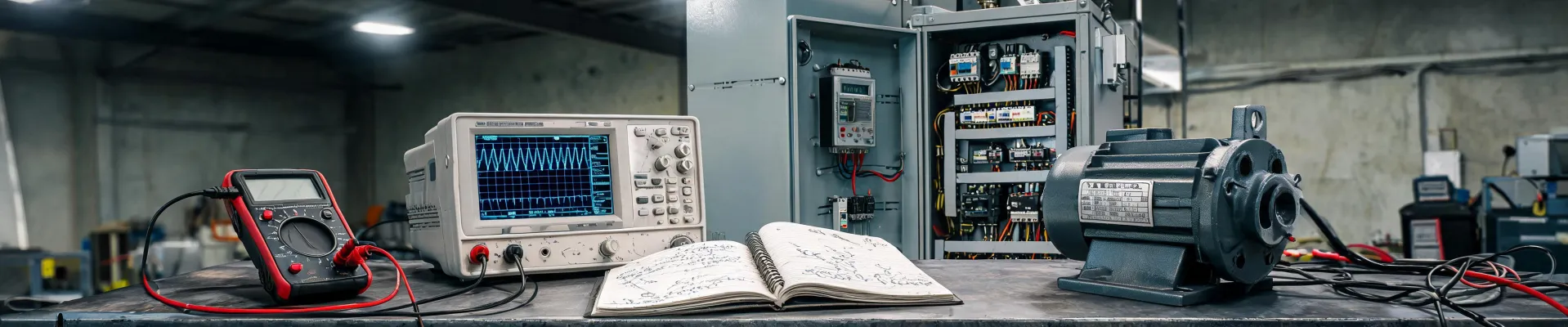
That Tuesday started like any other incoming inspection
I'm the quality and compliance manager at a distributor that supplies electrical testing instruments to regional wholesalers, industrial maintenance teams, and OEM partners. If it enters our warehouse—a single Hioki multimeter, a box of test leads, a batch of 400 bulk sensor units, or a full palletized order—it goes through my review before it reaches a customer. Over the last four years, that has meant inspecting 200+ distinct deliveries per year. In that time, I've signed off on rush orders, rejected full shipments, and learned the difference between "looks the same" and "actually is the same." That difference ended up costing us roughly $22,000 in November 2023.
The story starts with a quote that looked like a win. Or so we thought.
The order: 500 Hioki multimeters and a supplier with a tempting price
One of our long-standing customers—a regional distributor serving automotive and industrial facilities—sent us a request for 500 units of a professional Hioki multimeter series, plus an order for bulk sensor replacements that they planned to bundle for their maintenance clients. They gave us a three-week delivery window.
Our regular source could cover around 300 units in that time. Then a new supplier reached out to our procurement team with a quote that was 12% under the usual Hioki multimeter price. They said they had the current series in stock, with certification documents included. They even offered a free pre-shipment sample.
I know how this sounds. "When something seems too good to be true..."—but the price wasn't absurdly low. It was just the right amount of tempting. Enough to make our purchasing manager look good. Enough to make me keep quiet when I thought we should do a deeper supplier audit.
I asked the supplier one question: "Are you an authorized Hioki distributor?" They said yes. I didn't ask for proof. Not ideal, but workable, I told myself.
The serial number mismatch that ended the deal
The first two pallets arrived on a Tuesday morning in November 2023. The boxes looked right. The models matched the PO. The printed calibration certificates were tucked into the side pocket of each shipping carton—neat, professional, and easy to check.
We pulled 10 units at random and ran through our basic verification. The displays were crisp, the rotary switches clicked properly, and the functions responded correctly to our reference source. The meters read slightly differently from each other—not unusual, since unit-to-unit variation exists even in premium instruments—but all of them sat well inside the printed tolerance. Good. I initialed the inspection sheet.
Then I checked the serial numbers against the calibration certificates.
The certificates were supposed to be device-specific. Instead, the line items referenced a range of serial numbers that didn't match our inventory list. The certificate pages were dated about three years before the delivery, while the devices themselves carried a newer production code. It looked like someone photocopied a batch of old certificates and hoped nobody would check the numbers.
I called the supplier. Their answer: "The meters are genuine Hioki. The certificates are valid for this series."
Look, genuine is not the same as correct. When an industrial customer asks for a calibrated Hioki multimeter, they expect traceability: a certificate that names that specific unit, with its serial number, issuance date, and a signature from a qualified lab. A generic sheet covering "the series" doesn't prove anything about the actual instrument in the box.
We did a second, deeper round of checks on 30 units. Functionally, the meters were acceptable. That made the decision harder, because in quality, the worst cases aren't always black and white. Not great, not terrible. Just wrong enough to cause problems downstream.
Our customer's quality team would catch the certificate mismatch within minutes. If we shipped those units, we would be the ones facing the recall, not the supplier.
Making it right: the part nobody budgets for
We rejected the delivery. The supplier argued, then agreed to reship with proper documentation. Even with their cooperation, we lost almost a week. To meet our customer's deadline, we had to arrange urgent air freight, pay warehouse staff overtime to re-inspect every replacement unit, and send 20 units to an independent ISO/IEC 17025-accredited laboratory before we felt comfortable shipping.
Total extra cost: roughly $22,000. The original quote saved us about $4,500. In other words, the "cheap" multimeter supplier ended up costing us $17,500 more than the normal route.
That's the answer to the question people keep asking me—how to choose a multimeter for wholesale. A low price isn't a reason to say no. It's a reason to ask better questions before you commit.
How I choose a multimeter supplier today
We now run every new or non-authorized supplier through a simple screening process before we place a bulk order. It won't catch every problem, but it would have caught this one.
- Verify channel status. Ask for a distributor certificate or written confirmation from the manufacturer. If the supplier hesitates, treat that as a red flag.
- Confirm that calibration certificates are device-specific. The serial number on the certificate should match the serial number on the product. No ranges. No "same series" language.
- Check production codes. If the supplier claims current stock, the labels should match current manufacturing codes. Old stock isn't automatically bad, but it should be described and priced as old stock.
- Request photos of actual units before shipment. Ask them to photograph the label, the firmware version screen, and the accessories. Photos are cheap to take and difficult to argue with.
- Inspect the first 3-5% of the batch on arrival. For 500 units, that means 15-25 pieces, not a single sample.
The same discipline applies when we buy bulk sensor stock. We don't trust a single batch certificate; we sample across product runs and compare readings against a reference. If the first batch of sensors is consistent, we release the order. If not, we dig deeper.
Some suppliers ask why we're so demanding. The honest answer is that one bad lot costs more than the profits from five good ones. An informed customer is better for everyone—they ask sharper questions, set realistic specs, and don't blame us later for something we both should have caught.
Bottom line
That Tuesday morning reminded me that the goal isn't to find the lowest Hioki multimeter price. It's to find the lowest total cost—including freight, document errors, rejected lots, and lost trust with your customer. The price list is just the first chapter of the story.
If you're buying a single meter for your own workbench, a little paperwork isn't a huge deal. But if you're sourcing hundreds of units, the supplier is as important as the brand on the front. The unit in your hand may work fine. The question is whether the next 499 will too—and whether you can prove it.
That's a lesson I learned for $22,000. I'd rather share it for free.

Rebecca Sloan
Rebecca Sloan is a power distribution and protection analyst specializing in circuit breakers, switchgear, contactors, fuses, surge protective devices, and coordination. She applies IEC 60947-2 breaker requirements, IEC 60269 fuse characteristics, and IEC 61643-11 tests while examining rated voltage, breaking capacity, time-current curves, selectivity, and prospective short-circuit current. She helps engineers and buyers compare protective devices against documented fault levels, installation conditions, maintenance access, and continuity priorities.